Sharp, Sparse, Strained: A Review on Flesh by David Szalay
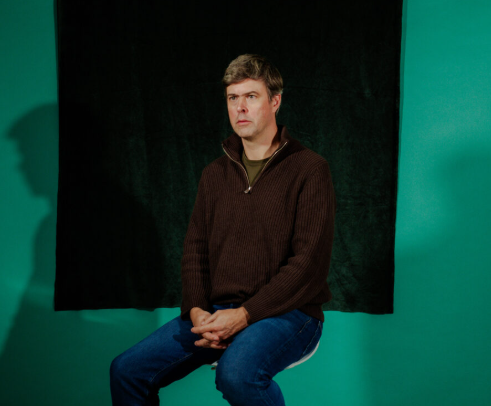
Life happens at Istvan rather than through him, echoed in Szalay’s bold artistic choice in his prose style: extraordinarily spare and direct. Dialogue is minimalist, and much of Istvan’s interior life goes unstated. Instead, meaning is curated through what is omitted and through the physical actions of the character, offering the novel an almost hypnotic effect – readers are forced to read between the lines and fill in emotional gaps themselves.
This pared-down approach reflects the thematic heart of Flesh: the primacy of the body and physical experiences over articulated through thought or emotion. Szalay himself has described his aim as expressing “the feeling... that our existence is a physical experience before it is anything else.” The title, Flesh, evokes this perspective, reminding us that humans are biological beings first, driven by impulses, hurts, and desires that language struggles to contain.
But beneath the stylistic experiment lie broader themes with universal resonance. Flesh wrestles with masculinity and emotional repression, showing how a society that prizes stoicism can leave individuals alienated from their own feelings. It explores trauma and its aftershocks, showing how early life events leave deep marks that shape behavior and relationships decades later. Indeed, it is interesting that the novel starts with Istvan’s inappropriate relationship with an older woman and ends when the women in his life disappear.
Check out David Szalay's interview with Dua Lipa below!
David Szalay’s Flesh (2025) is a novel that has grabbed the literary world’s attention – not least because it won the 2025 Booker Prize, with judges calling it “dark but a joy to read.”
At its core, Flesh is the life story of Istvan, a Hungarian man whose existence is shaped as much by chance and circumstances as by his own choices. We first meet him as a shy fifteen-year-old living with his mother in a housing estate in Hungary. An intense and deeply inappropriate relationship with a much older neighbor results in a violent climax early on, a formative moment that echoes through the rest of his life.
What follows isn’t a conventional plot so much as a series of episodes showing Istvan buffeted by forces beyond his control – from military service to moving to London and drifting through jobs from bouncer to chauffer for a wealthy family. Through it all, he ascends into the elite yet remains emotionally detached and passive, almost a spectator to his own fate.

My overall response to Flesh is a conflicted one. I admire Szalay’s bold minimalism, which at times recalls the restrained style of one of my favorite writers, Salley Rooney. The silence between words often feels as meaningful as what is spoken – although a quick search on the Book app revealed 199 instances of Istvan saying “okay,” which slightly undercuts that restraint through its very emptiness. At the same time, I found the novel’s emotional distance and clipped prose frequently frustrating.
Szalay’s decision to keep significant events off-stage creates an intentional sense of detachment, but it also leaves parts of the narrative feeling incomplete, as though the reader is continually arriving just after something important has already happened. Then again, this mirrors Istvan’s own way of moving through life: events are only felt once they are already in the past, when it may be too late to respond.
Yet I recognize that this very tension is part of Flesh’s ambition. Szalay doesn’t give easy answers or resolved arcs. Instead, he places us in the midst of a life that is at once deeply particular and strangely representative of the human condition. In doing so, he has created a novel that lingers in the mind.
*narrativecase rating - 7/10
Create Your Own Website With Webador